In the News
Breast cancer can spread—or metastasize—to many different parts of the body, but it’s not well understood why tumors grow better in some organs than others. We explored whether the nutrients available in different tissues help determine where cancer spreads. Using mouse models and advanced metabolic profiling, we measured nutrient levels across several organs and tested how depriving cancer cells of specific nutrients affected their ability to form metastases.
Surprisingly, we found that no single nutrient explains why breast cancer grows in one organ and not another. Instead, a combination of multiple nutrients and cancer cell characteristics work together to determine where tumors can thrive.
See the MGB Research Spotlight HERE
See the article HERE.
How A Fringe Idea Led To Lifesaving Cancer Treatments
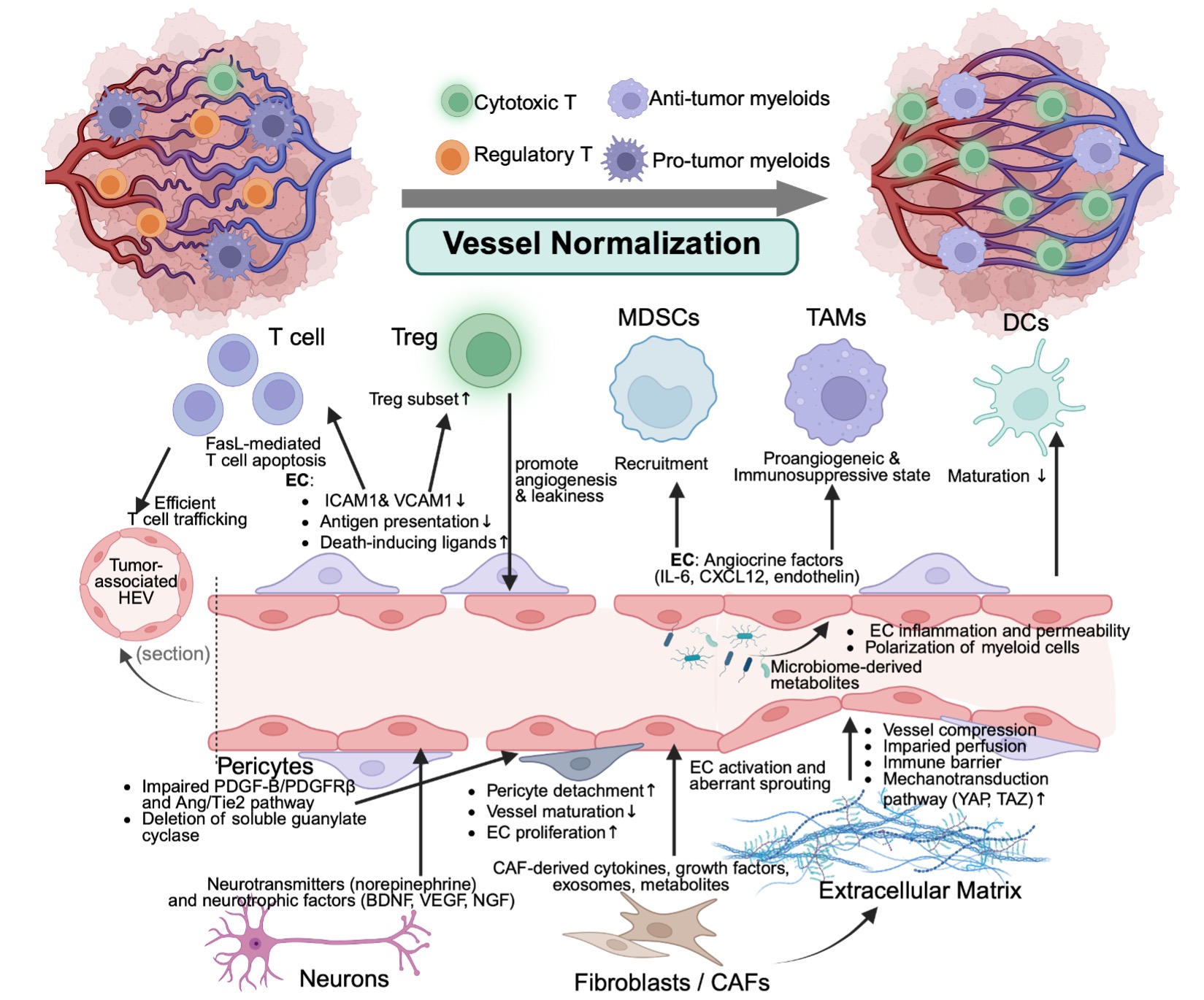
In cancer research, the “seed and soil” hypothesis posits that the tumor is like a seed of misbehaving cells taking root in the body. Whether it grows—and where it grows—depends on the conditions, or soil. Since this hypothesis was proposed more than 100 years ago, most research and treatments have focused on the seed, or tumor.
For nearly 50 years, Rakesh Jain has been studying the soil. But in a seed-focused field, his work was seen as wasteful and radical. Now, that very same research has led to seven FDA-approved treatments for diseases including lung and liver cancer, and earned him a National Medal of Science in 2016. Host Flora Lichtman talks with Jain about how his fringe idea led to lifesaving cancer treatments.
Guest: Dr. Rakesh K. Jain studies the biology of tumors at Harvard Medical School and Massachusetts General Hospital as a professor of radiation oncology.
Transcripts for each episode are available within 1-3 days at sciencefriday.com.

40th Anniversary TME course this week!